Three women with curly hair; one of them is holding a toothbrush to her mouth.

Petrolatum for Skin: What it Is and How it Works

Show more

Petrolatum is a popular ingredient used in skincare products to help support skin’s moisture levels and help support the skin’s moisture barrier. It is commonly found in products developed to help address concerns with dry, irritated skin.

This article explains what Petrolatum is, how it works in skincare, and its key skin benefits. Read on to learn how to incorporate Petrolatum into your skincare routine, and how it can be used alongside other commonly used skincare ingredients to help nourish and support your skin.
What is Petrolatum and how does it work?

Petrolatum, also known as Petroleum Jelly, is a versatile occlusive moisturizer included in many skincare products such as ointments, topical protectants, and lubricants, to help support moisture levels in the skin. Unlike humectants that attract moisture, and emollients that soften the skin, Petrolatum is an occlusive which means that it forms a barrier on the skin that helps to prevent water evaporation and reduce transepidermal water loss (TEWL).

Studies have shown that Petrolatum is such an effective occlusive moisturizer, it can reduce water loss through the outer layer of the skin by nearly 99%. Its effectiveness at preventing water loss in the skin makes it an ideal ingredient for skincare products designed to support dry skin.

Where does Petrolatum come from?

Petrolatum is produced as a byproduct when processing petroleum oil. It’s comprised of a semisolid mix of liquid oil and wax solids and is nearly odorless.

Is Petrolatum the same thing as petroleum jelly?

Yes, the terms Petrolatum and petroleum jelly are interchangeable.

What are the benefits of Petrolatum?

It’s sensitive skin-friendly

Petrolatum has low allergenic potential and does not cause burning or stinging when applied to the skin, making it an ideal ingredient for use in ointments and other skincare products that may be applied to sensitive skin.

It provides effective protection against moisture loss in the skin

Petrolatum’s occlusive properties allow it to create an effective barrier on the skin that prevents up to 99% of moisture loss through the outer layer of the skin.

It helps moisturize skin without clogging pores

Some studies have claimed that Petrolatum is comedogenic (meaning it clogs pores) because of its physical properties, but those studies were not backed by sources. Petroleum jelly does not clog pores when used by itself. For people who have acne-prone skin or active breakouts, applying petroleum jelly over broken out skin may exacerbate things by trapping dirt and oil under the barrier if skin is not properly cleansed prior to applying, but petrolatum does not cause clogged pores.

It can be used with other nourishing skincare ingredients

Petrolatum’s occlusive, moisturizing properties can provide benefits to skincare products formulated with other nourishing ingredients. In Aquaphor Healing Ointment®, for example, Petrolatum is combined with humectant Glycerin and emollient Panthenol (Provitamin B5) in a formula designed to deliver soothing moisture and protection.

How to incorporate Petrolatum into your skincare routine

If you find your skin is feeling dry or are looking for some extra nourishing care, incorporating Petrolatum into your skincare routine can help support skin’s moisture and soothe dry, cracked skin. While you can apply petroleum jelly to your skin as-is, you can enjoy more skin-soothing benefits in a formula that incorporates petroleum jelly alongside other hydrating ingredients.

Petrolatum in body care for dry, cracked skin

For areas of very dry, cracked, or rough-feeling skin, look for a nourishing skin protectant containing Petrolatum to help provide a soothing barrier that enables skin to recover.

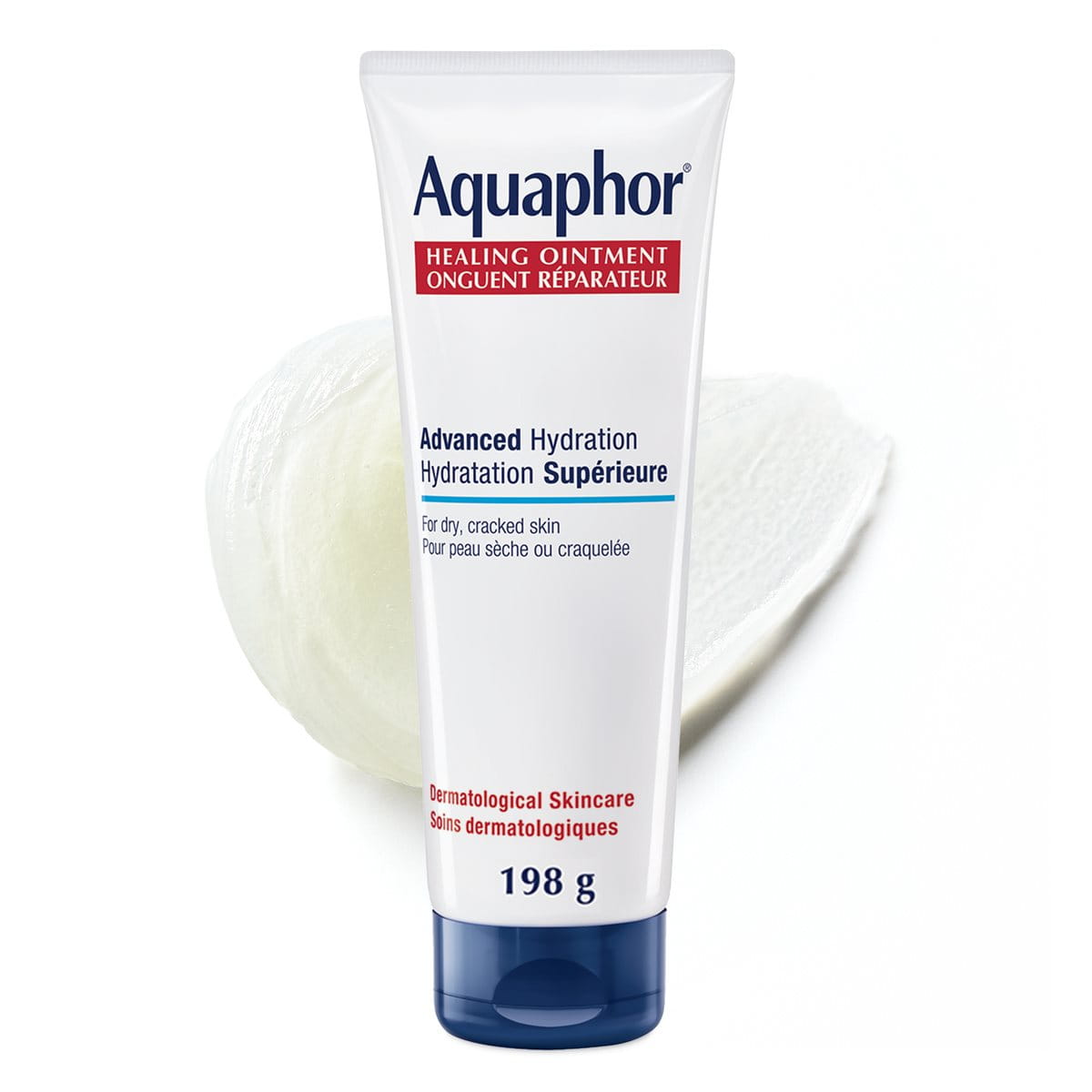
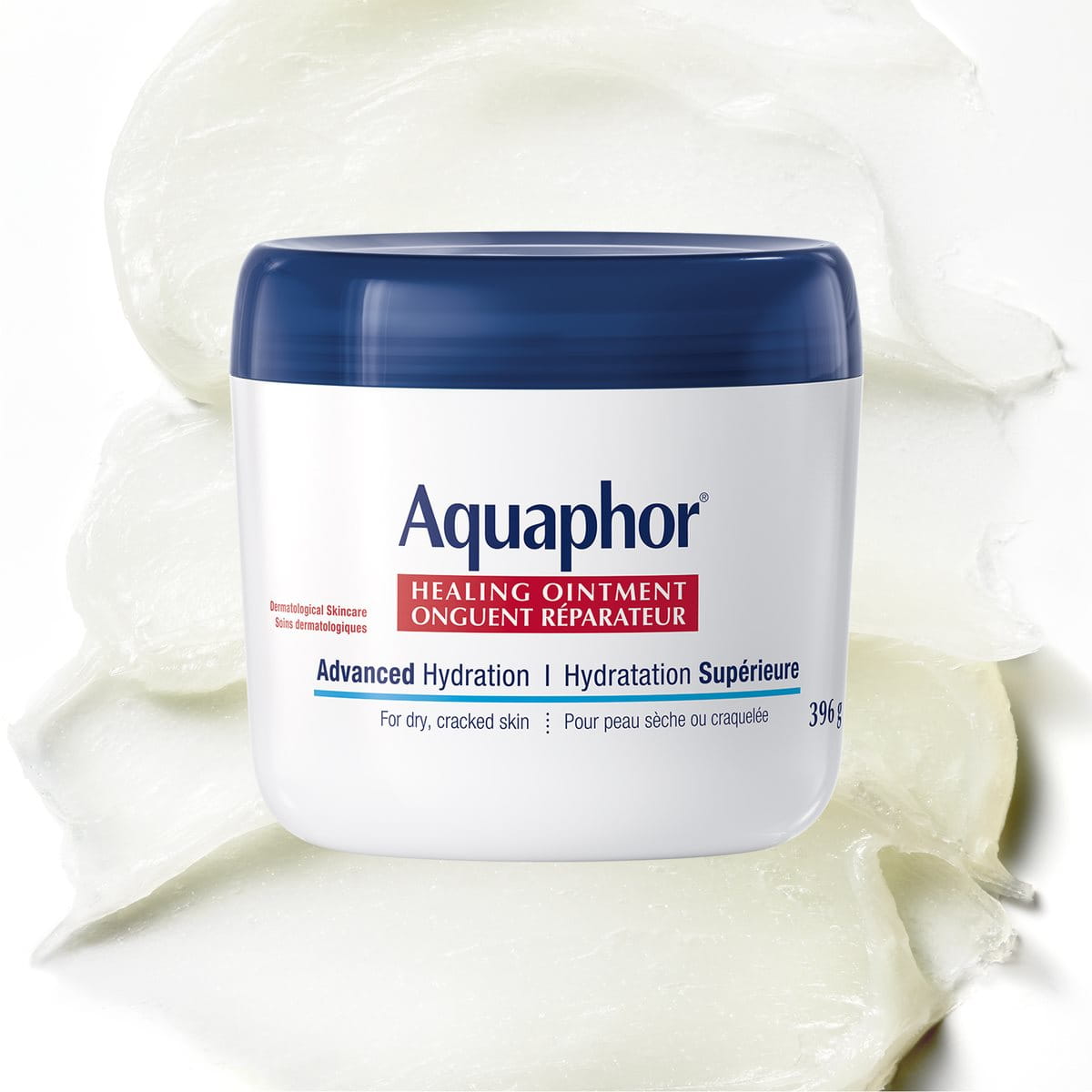
Aquaphor Healing Ointment® is a skin protectant ointment formulated with Petrolatum, Panthenol and Glycerin to moisturize, nourish, and protect the skin. This soothing ointment protects and helps relieve dry, chapped lips as well. Preservative and fragrance-free, this skin protectant is uniquely formulated to restore smooth, healthy skin anywhere your skin needs attention – from dry hands to dry, cracked feet, windburned cheeks, a dry nose, and more.

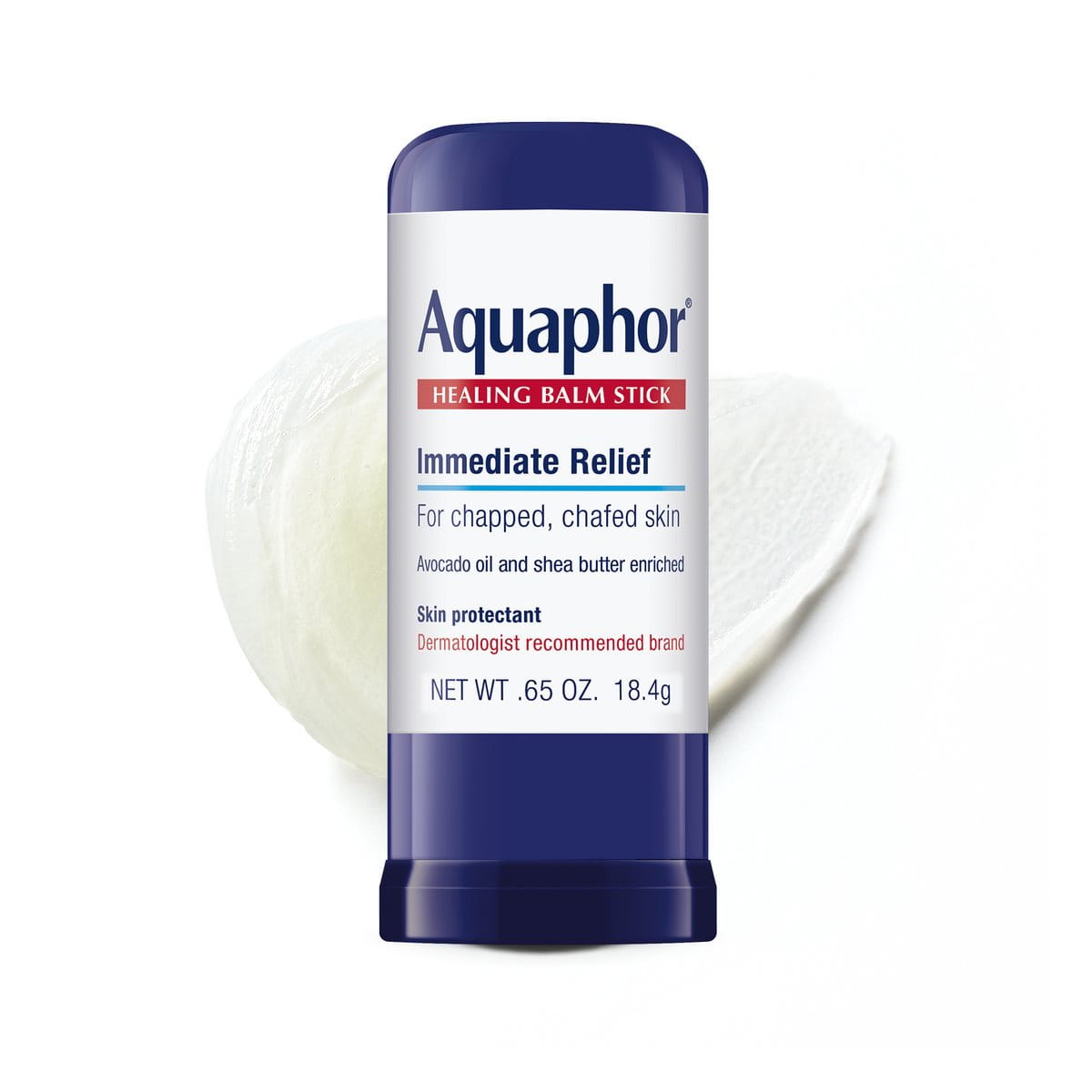
With the soothing relief of Aquaphor Healing Ointment® for chapped, chafed skin in a convenient, on-the-go format, try Aquaphor® Healing Balm Stick. Enriched with Avocado Oil and Shea Butter, this multi-purpose healing stick provides effective protection and immediate relief to chafed, dry skin and cracked heels and feet. Hypoallergenic and free of fragrances and parabens, Aquaphor® Healing Balm Stick glides on smoothly without a sticky feel so you can soothe your skin and get back to the activities you enjoy.

Petrolatum in lip care

If you’re experiencing dry, chapped lips, you can also apply Aquaphor Healing Ointment® to your lips for some extra nourishing care. Aquaphor Healing Ointment® can also be used as a lip gloss, highlighter, and for slugging. Formulated to create a semi-permeable, protective barrier over the skin which reduces water loss and allows the skin to breathe, Aquaphor Healing Ointment® has also been clinically and dermatologically tested to nourish & soothe dry to very dry, as well as cracked, irritated skin. Available in a convenient tube format, Aquaphor Healing Ointment® offers versatile skincare you can take with you.

Can Petrolatum be used with other skincare ingredients?

Skincare products containing Petrolatum or petroleum jelly often contain other nourishing ingredients to help create a formula that hydrates and soothes dry skin.

Petrolatum with Glycerin and other Humectants

Petrolatum works in tandem with humectants such as Glycerin in formulas that help to support skin hydration and maintain moisture balance in the skin. Humectants draw moisture to the skin, and petrolatum and other occlusives help seal that moisture in under the protective barrier they form on the skin.

How Petrolatum works with Emollients

Emollients like Panthenol (also known as Provitamin B5) help to soften and nourish skin. Panthenol actually does double duty as both a humectant and emollient, and when combined with the occlusive properties of Petrolatum, skin benefits from being moisturized while improving feelings of softness and smoothness.

Aquaphor Healing Ointment® has a formula made with Petrolatum, Glycerin, and Panthenol, bringing together the skin benefits of occlusives, humectants, and emollients in one versatile, soothing skin protectant.

Summary: Key facts about Petrolatum for skin

Petrolatum, also known as petroleum jelly, is a byproduct derived from processing petroleum oil. It’s a semisolid occlusive moisturizer used in a variety of skincare products to help provide a protective barrier on the skin that helps prevent transepidermal water loss (TEWL) by up to 99%.

While petrolatum can be applied to skin on its own, it’s common to see Petrolatum as an ingredient in moisturizing skincare products alongside other ingredients like humectants and emollients to provide nourishing moisturization and conditioning for dry, cracked skin, as found in Aquaphor Healing Ointment®.

This rich, nearly odorless moisturizer has a low allergenic profile and doesn’t sting when applied, making it a well-tolerated ingredient for sensitive skin.

FAQs about Petrolatum for skin (5)

  • What is Petrolatum?

    Petrolatum, also known as petroleum jelly, is an occlusive moisturizer widely used in skincare to help soothe dry skin and help skin retain moisture.

  • What does Petrolatum do for skin?

    Petrolatum the skin retain moisture by forming an occlusive barrier over the surface. It enables skin to reduce water loss and is commonly found in nourishing skincare products for dry skin.

  • Can Petrolatum be used every day?

    Petrolatum can be used any time skin feels dry. Skincare products containing petrolatum may be used every day, depending on the formula. Refer to your skincare products’ packaging for application guidance.

  • Does Petroleum jelly clog pores?

    No. Petrolatum is non-comedogenic, meaning it doesn’t clog pores on its own. If you are using skincare products containing petrolatum, check for words like “non-comedogenic” on the label to ensure their formula also won’t clog pores.

  • When should you avoid Petrolatum?

    While allergies to Petrolatum are rare, you should avoid using it if your skin has any negative reactions. If you have acne-prone skin, check with your dermatologist before applying Petrolatum or products containing it, as even though it doesn’t cause clogged pores, its barrier could potentially trap dirt and oil if skin isn’t properly cleansed prior to using.

Related Product

The information provided herein is not intended to be medical advice. Nor is it intended to treat the underlying skin disease or condition. The information is provided solely to:

  1. Moisturize, soften and smooth dry skin
  2. Improve the appearance of the skin
  3. Achieve healthier-looking skin

Sources

  1. Harwood, A.; Nassereddin, A.; Krishnamurthy, K. Moisturizers. In StatPearls [Internet]; StatPearls Publishing: Treasure Island, FL, 2024. Updated February 12, 2024. https://www.ncbi.nlm.nih.gov/books/NBK545171/ (accessed 2026-11-12).
  2. Kamrani, P.; Hedrick, J.; Marks, J. G.; Zaenglein, A. L. Petroleum Jelly: A Comprehensive Review of Its History, Uses, and Safety. J. Am. Acad. Dermatol. 2024, 90 (4), 807–813. https://doi.org/10.1016/j.jaad.2023.06.010.
  3. National Center for Biotechnology Information. Petrolatum. PubChem. https://pubchem.ncbi.nlm.nih.gov/compound/Petrolatum (accessed 2026-11-12).
  4. Cleveland Clinic. Emollients: Creams, Soaps, Moisturizers, Ointments, Benefits. https://my.clevelandclinic.org/health/treatments/23305-emollients (accessed 2026-11-12).
  5. Skin Cancer & Dermatology Institute. Petroleum Jelly Benefits and Uses: Advice from a Reno Dermatologist. https://skincancerderm.com/petroleum-jelly-benefits-and-uses-advice-from-a-reno-dermatologist/ (accessed 2026-11-12).
  6. Meckfessel, M. H. A Moisturizing Cream with Panthenol, Glycerin, and Niacinamide Provides Superior Skin Barrier Recovery. J. Am. Acad. Dermatol. 2022, 87 (3 Suppl.), AB131. https://doi.org/10.1016/j.jaad.2022.06.557.
  7. Cleveland Clinic. What Does Vitamin B5 Do for Your Hair and Skin? February 1, 2024. https://health.clevelandclinic.org/vitamin-b5-for-skin-hair (accessed 2026-11-12).